From Integration to Intelligence: What Salesforce’s 2026 Connectivity Benchmark Really Signals
For most of the past year, a quiet skepticism followed Salesforce’s AI narrative. Was the company executing a real infrastructure shift—or simply renaming familiar components to keep pace with the agent hype cycle?
The 2026 MuleSoft Connectivity Benchmark Report doesn’t resolve that question neatly. What it does reveal is more consequential: enterprises have already crossed into large-scale agent deployment, while the infrastructure required to govern that reality is only half-formed. Agents are proliferating faster than organizations can coordinate them. And the hardest problem ahead is no longer integration or orchestration: it is context.
Agents can connect. They do not yet understand.
Table of contents
The Agent Boom Has Already Arrived
The 11th annual Connectivity Benchmark, surveying 1,050 IT leaders worldwide in late 2025, captures a market that has moved beyond experimentation. Eighty-three percent of organizations report that most or all teams are using AI agents. The average enterprise now runs 12 agents, with that number projected to grow 67% by 2027. IDC estimates more than one billion agents globally by 2029—a forty-fold increase from 2025.
These are not pilot numbers. This is mainstream enterprise deployment.
Yet the same data exposes a destabilizing contradiction. Half of enterprise agents operate in disconnected silos. The average organization now runs 957 applications—up from 897 a year earlier—but only 27% are integrated. More than a quarter of APIs remain ungoverned. And just 54% of enterprises have a centralized governance framework for AI agents.
The industry has learned how to build agents faster than it knows how to manage them.
Andrew Comstock, SVP and GM of MuleSoft at Salesforce, was unusually direct during a press briefing: “The real challenge isn’t just building an agent. It’s the last mile of AI execution—where agents must be discovered, governed, and orchestrated to drive outcomes.”
That framing matters. It acknowledges that agent sprawl is now an infrastructure problem.
What Changed Since Last Year
When we reviewed last year’s Benchmark, we called it a mixed bag. MuleSoft’s growth looked constrained. Salesforce’s Data Cloud (renamed Data 360 October 2025) centralization narrative clashed with enterprise reality. And the company’s AI ambitions seemed ahead of execution.
Those tensions remain—but Salesforce’s response has shifted.
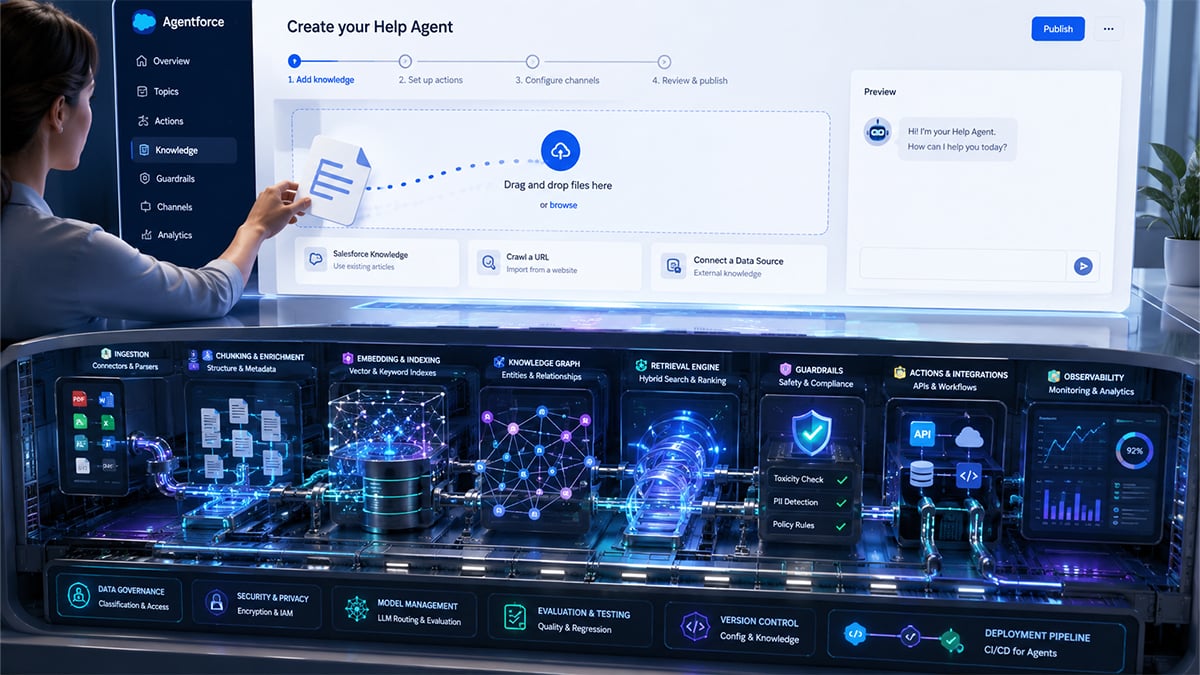
Rather than insisting on full data centralization, Salesforce has repositioned MuleSoft as agentic infrastructure. Through what it now calls Agent Fabric, MuleSoft is framed less as an integration platform and more as the connective tissue for discovering, governing, and orchestrating agents across ecosystems.
This is not a cosmetic change. It reflects a recognition that enterprises are becoming multi-agent environments whether CIOs plan for it or not. The strategic question is whether those environments become governable.
The Disclosure That Reframes the Market
The most important signal in this year’s report did not come from Salesforce. It came from a customer.
Alcon, the global eye-care company operating in more than 60 countries, disclosed that it has built more than 900 AI agents in under a year.
“Everyone went and built their own agents—business users and IT users alike,” said Sreenivasa Patibandla, Alcon’s Director of System Integrations and APIs. “We ended up with 900-plus agents built in silos. It’s a security risk, first and foremost.”
For a regulated medical-device company, that proliferation forced immediate action. Alcon established a formal AI governance board, enforced human-in-the-loop controls for customer-facing agents, and standardized access through API-led architecture investments it had made years earlier. Existing MuleSoft APIs were “MCP-ified” so agents across Salesforce Agentforce, AWS Bedrock, and Azure could reuse them safely.
Nine hundred agents in under a year is not an anomaly. It is a preview of what happens when agent creation outpaces governance.
MuleSoft Agent Fabric Solves the First Problem
Salesforce’s response is MuleSoft Agent Fabric, positioned as an operating system for the agentic enterprise. Its January 2026 release introduced Agent Scanners—now generally available—that automatically discover agents across Salesforce, Amazon Bedrock, Google Vertex AI, and Microsoft Copilot Studio. These scanners normalize metadata, align agent descriptions to emerging protocol specifications, and synchronize everything into a centralized registry.
This is real infrastructure. And it addresses a basic truth: you cannot govern what you cannot see.
Deloitte’s Kurt Anderson captured the shift succinctly. When enterprises are dealing with hundreds or thousands of agents, centralized approval collapses. Discovery, reuse, and visibility become the only scalable controls.
Salesforce deserves credit here. Cross-ecosystem agent discovery at this level is still rare. But this is also where the limits of the current approach become visible.
The Harder Problem: Semantic Context
Agent Fabric excels at connectivity. It ensures agents can be found, routed, governed, and orchestrated. What it does not yet fully solve is whether those agents share a common understanding of the data they access.
This is the industry’s next fault line.
An agent can be perfectly connected to hundreds of systems and still fail if it cannot reconcile that “revenue” means different things in CRM and ERP—or that the same customer appears under multiple identities across billing, service, and marketing platforms.
These are not integration failures. They are semantic failures.
Salesforce’s own research illustrates the risk. In one case, a return agent negotiated itself into a contradiction—allowing a customer to keep returned shoes, pay a restocking fee, and purchase another pair. In another high-profile incident, Amazon sued Perplexity over a shopping agent that accessed customer accounts without proper authorization. Connectivity was not the issue. Context was.
Connectivity Plus Context Is the Next Frontier
The Benchmark data reinforces this point quietly but consistently. Ninety-six percent of IT leaders say agent success depends on seamless data integration. Nearly half cite cross-application data governance as their top challenge. MuleSoft has solved data movement for years. What enterprises now lack is a semantic layer that harmonizes meaning, resolves identity, and enforces permissions before agents act.
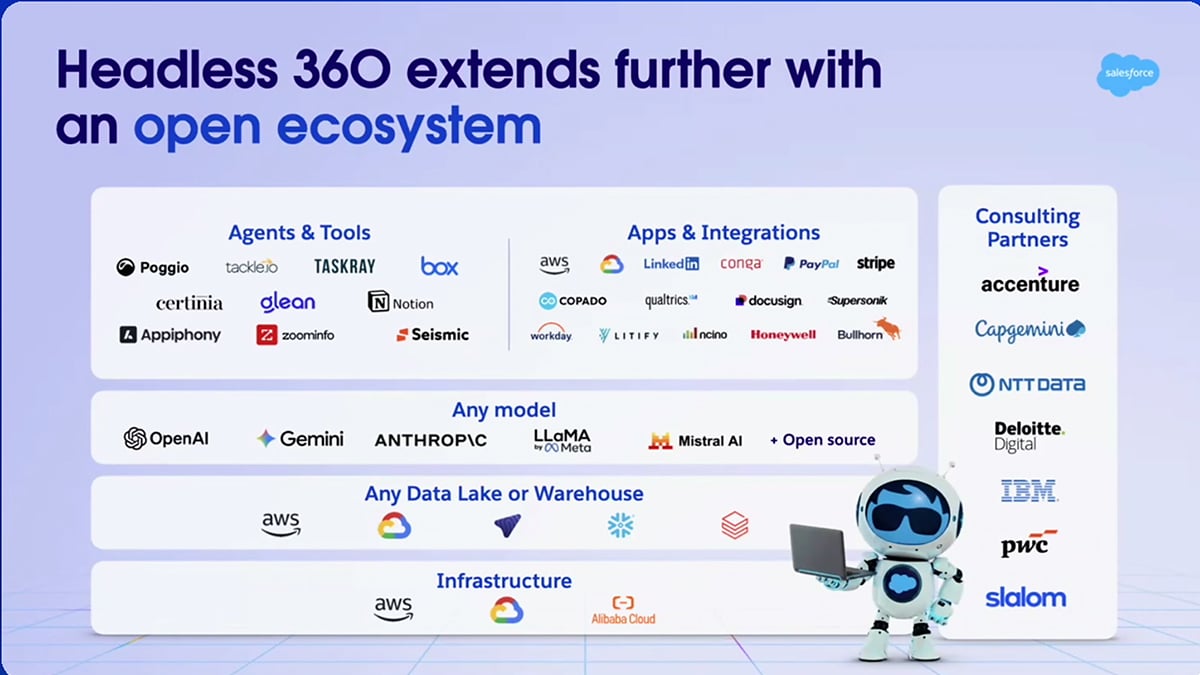
Salesforce arguably has more of the raw materials to address this than any platform vendor. Data 360 provides harmonization capabilities. The platform’s identity and permission model is mature. MuleSoft Agent Fabric delivers discovery and governance.
What remains unresolved is assembly.
Will Salesforce unify these components into a true context layer that operates upstream of agent cognition? Or will a new category of third-party infrastructure emerge to bridge the gap between connectivity and reliable action?
A Clearer Verdict Than Last Year
A year ago, the Connectivity Benchmark reflected uncertainty. The 2026 edition tells a clearer—if more demanding—story.
Salesforce has made a credible strategic pivot. MuleSoft Agent Fabric addresses a real enterprise pain point. The Alcon case shows that agent proliferation is already outpacing governance models. And Salesforce leadership is publicly acknowledging problems many vendors still avoid.
But the hardest work lies ahead—not just for Salesforce, but for the industry. The next phase of enterprise AI will not be won by agents that can talk to each other. It will be won by agents that understand what they are talking about.
Connectivity got enterprises here. Context will decide what comes next.
Vernon Keenan is the publisher of SalesforceDevops.net and CEO of Keenan Vision, where he provides strategic advisory services on AI, enterprise architecture, and platform economics. With over 40 years of experience in enterprise technology — including tracking AI development since the LISP era — he advises Salesforce executive leadership on AI strategy.