Parker Harris Just Told You to Stop Logging into Salesforce
The co-founder’s candid admission about Lightning, a native CRM that requires zero Salesforce experience, and an unreported research project called “Albert” — inside the March 31 Slackbot event.
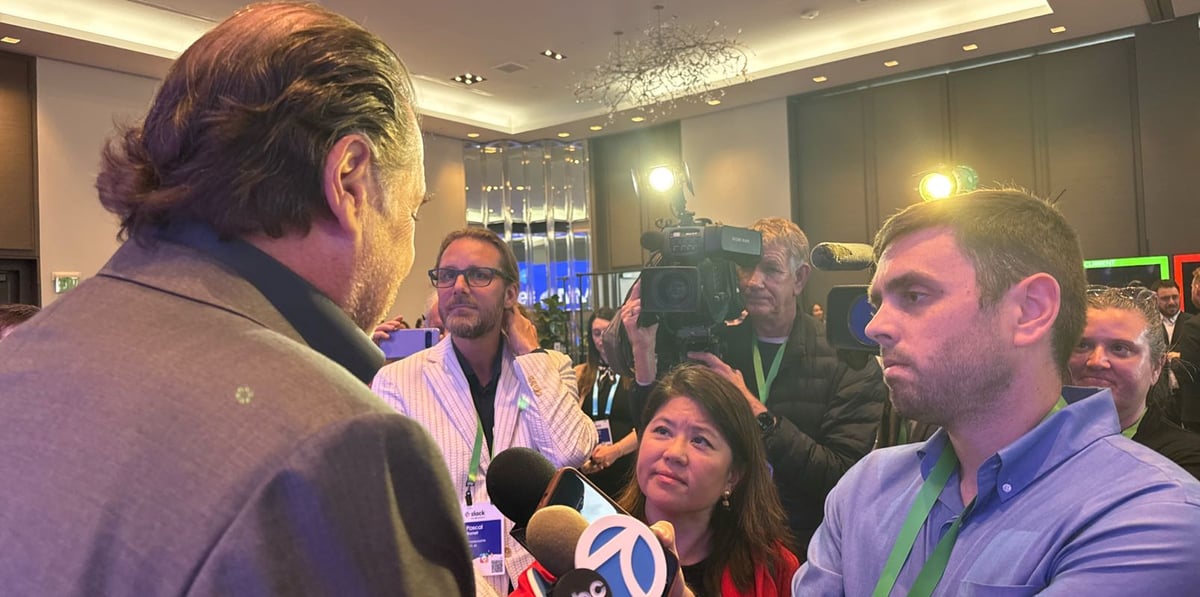
SAN FRANCISCO — Parker Harris stood in front of a roomful of press, analysts, and partners at the St. Regis Hotel today and said the quiet part out loud.
“We are basically saying, why should I ever log into Salesforce? I built the Lightning UI. I worked really hard on it. Why should you ever log into Salesforce again?”
He paused. “Maybe you never will. Maybe you will go into Slack.”
That is not just a product update. That is the co-founder of a $300 billion enterprise software company publicly acknowledging that the interface his teams spent a decade building is being deliberately repositioned as a back-end system. Lightning still has a role, Harris conceded. But the future engagement layer is Slack.
Marc Benioff reinforced it in a fireside conversation with Matt Berman later in the day. When asked whether the traditional Salesforce interface would fade, Benioff was unequivocal: “There’s no question.” He described Slackbot as “a highly composable object that can be dropped into every capability” and confirmed Salesforce is “rebuilding our entire user interface using Slack.” He even signaled ambitions beyond the Slack container, saying he wants Slackbot to work within Microsoft Teams, Google Workspace, and every Salesforce application directly.
For those of us who have been tracking the Slack-first trajectory since Dreamforce 2025, this confirmation was overdue and welcome. Slack has tripled in revenue since the $27 billion acquisition five years ago. More than a million businesses now run on it. What Salesforce announced today are more than 30 new capabilities that transform Slackbot from a personal assistant into what Harris called “the front door to the agentic enterprise.” But the real news is the strategic architecture those capabilities reveal: Slack is no longer Salesforce’s collaboration add-on. It is becoming Salesforce’s primary user interface — for enterprises, for small businesses, and for the ecosystem building on the platform.
This is the most consequential strategic shift Salesforce has made since the move from Classic to Lightning. And this time, they are not asking customers to migrate. They are asking them to have a conversation.
Table of contents
What Actually Shipped
The 30+ capabilities cluster around six strategic moves.
Slackbot leaves the container
For the first time, Slackbot operates as a persistent desktop companion that travels with users across applications. Rob Seaman, Slack’s GM, demonstrated it reading a spreadsheet on screen, analyzing a budget, generating a dynamic dashboard, and sharing results back to a channel — while simultaneously taking notes on a live Google Meet call. The governance established in Slack travels with it. No new policies to configure.
Meeting intelligence that acts
Slackbot now captures transcriptions, summarizes decisions, surfaces action items, and — because it is natively connected to Salesforce — updates CRM records the moment the meeting ends. Opportunities logged. Next steps captured. The meeting-to-follow-through pipeline that typically loses days to human latency becomes automated.
AI-skills as extensibility
“AI-skills” are reusable instruction sets that define a task’s inputs, steps, and output format. Slackbot ships with a built-in library, but anyone can create and share skills with teammates. Slackbot recognizes when a prompt matches an existing skill and invokes it automatically. In the Beast Industries demo, a “relocation skill” executed a complex workflow — searching Slack for historical briefs, generating an on-brand presentation in the corporate template, checking calendars, booking a meeting, and sharing everything to the relevant channel. Previously days of coordination, compressed to minutes.
MCP client for agent orchestration
Slackbot can now route work to any Agentforce agent, any of 2,600+ Slack Marketplace apps, and the 6,000+ apps built for the Salesforce AppExchange. The demo showed seamless orchestration across Linear for bug tracking, DocuSign for contracts, and Cursor for agent-assisted code fixes — all within a single conversation. Users describe what they need; Slackbot finds the right path.
Native CRM for small business
This is the announcement with the longest tail. Salesforce has built CRM directly into Slack — not as an integration but as a built-in capability. Small businesses manage contacts, deals, and follow-ups by talking to Slackbot. It reads channels, understands conversations, and keeps records updated automatically. A follow-up promised in a thread gets logged. A new contact introduced in a channel gets added. Behind the scenes, every record connects to Salesforce. When the business scales, there are no migrations and no starting over.
Conversational interface for Customer 360
For enterprise customers, Slackbot now serves as the conversational front end for the entire platform. The Agentforce Sales demo showed agentic prospecting (which went GA yesterday), automated meeting prep that synthesizes data across Salesforce, Slack, and connected apps, and a pipeline management agent that saved 125,000 hours of manual updates in two months in one organization. And starting this summer, every new Salesforce customer gets Slack automatically provisioned and connected from day one.
The MrBeast Factor
Beast Industries was not chosen as the featured customer by accident. MrBeast’s company represents a category of business that traditional enterprise software has never been able to reach — a creator-economy operation with 500+ employees, 470 million YouTube subscribers, and a production cadence that makes Fortune 500 planning cycles look glacial.
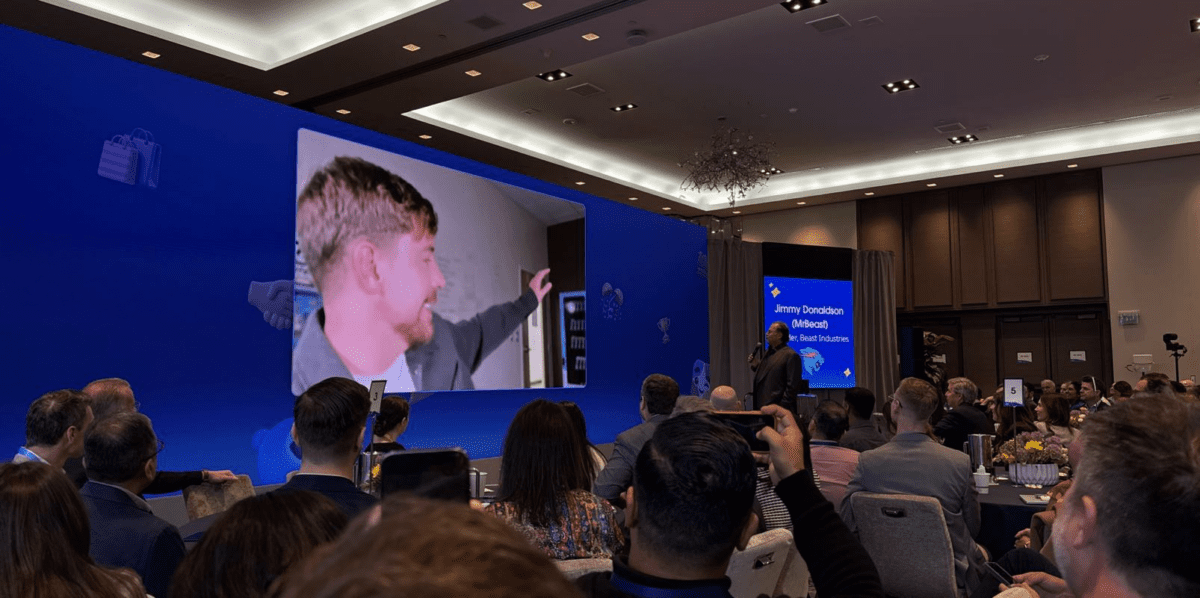
Jimmy Donaldson joined by video from a studio where he was actively filming. His use case is telling: he opens Slack on his phone, asks Slackbot for a summary of how a video production is going, and gets synthesized updates without reading dozens of individual messages. His CIO, Luis Madrigal, called the rollout one of the easiest enterprise technology deployments he has seen in two decades.
The strategic message: if Slackbot can handle the chaotic, high-velocity workflows of a company that simultaneously builds schools in Ghana and runs 1,000-person productions, the “we’re too complex for this” objection that traditional enterprises use to delay AI adoption loses its force.
Slack CRM and the Builder Gap
I asked Benioff directly how Slack CRM would impact small business. His answer: “It reminds me a lot of Salesforce in the early days.”
That comparison is not casual. Early Salesforce disrupted Siebel by making enterprise-grade capabilities accessible without the implementation overhead. Slack CRM is making the same move against Salesforce’s own complexity barrier.
This is what we have been calling the Builder Gap — the persistent distance between features software vendors ship and the ability of average practitioners to use them. The Salesforce ecosystem spent twenty years building an apparatus of consultants, integrators, training programs, and certification paths to bridge this gap. Yet our research shows 87% of Agentforce deployments stall, and the MIT NADA study documented that 95% GenAI pilots failed to generate revenue.
The Builder Gap is not a training problem. It is an interface problem. Slack CRM addresses it by eliminating the implementation layer entirely. No admin, no consultant, no training curriculum. You talk to Slackbot, and it maintains your records. Every Trailblazer becomes an architect — not because they learned architecture, but because the architecture learned to speak their language.
When asked about impact on systems integrators, Benioff called it “one of the most exciting but transformational moments” and noted engineers can now implement software immediately without waiting for professional services. That is diplomatic language for a structural disruption in the Salesforce services economy. The work does not disappear — it transforms toward agent design, orchestration, and governance — but the migration will not be painless.
The Architecture Stack, Laid Bare
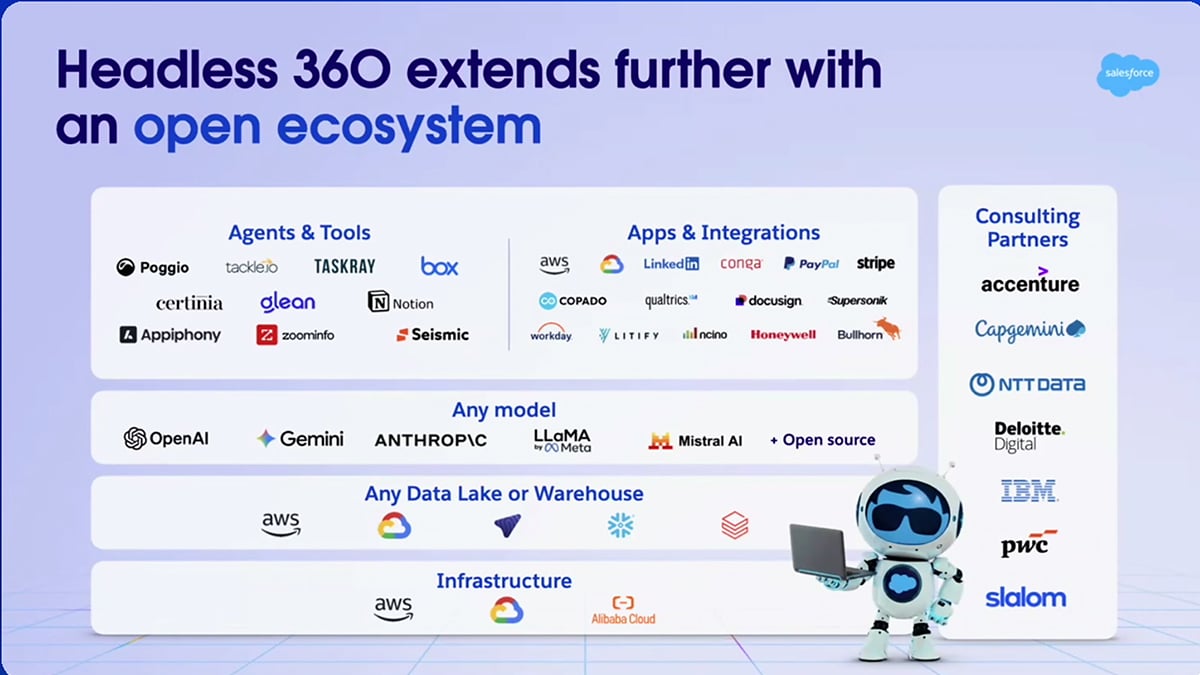
Benioff articulated the full Salesforce architecture more clearly today than at any previous event. At the base: the large language model, what Benioff calls a “commodity” and Harris calls “CPUs.” Slackbot runs on Anthropic’s Claude 4.6, but Gemini and OpenAI are coming. The model layer is deliberately fungible.
Above that: Data 360, enhanced by the Informatica acquisition, providing federated, harmonized data. Then the application layer — Sales, Service, Marketing, Tableau. The agentic layer — Agentforce. The employee agent — Slackbot. And at the top, what Benioff described as “a supervisory layer, or a control layer, even maybe Slack at that level” — orchestration across the entire architecture.
This maps a clear path from infrastructure to intelligence to interface, with Slack at the top. If the model layer is truly commodity, the value concentrates in the layers above — data, applications, agents, and the conversational interface. This is consistent with what I have been calling the “Revenge of the Embedded,” the thesis that AI’s economic value concentrates in platforms with existing billion-scale distribution, not overlaid AI context grabbers.
The Ecosystem as Moat
Harris dropped perhaps the most strategically significant data point of the event: 300% growth in custom AI agents on Slack since February, when the MCP server and Real-Time Search API went GA. Over roughly eight weeks, the developer community voted with its code.
Ami Borah, Anthropic’s Chief Product Officer, joined the stage and described how Anthropic’s internal “Notebook” culture — public Slack channels where leaders share weekly goals, progress, and strategic thinking — has become foundational to how the company operates. She noted Anthropic’s sales team achieved a 60% improvement in deal cycles using Slack and Agentforce together. Partner demonstrations from Cursor, Linear, DocuSign, and Vercel showed agents operating natively through MCP. Benioff noted that Slack now has “the most robust AI ecosystem in the world” and that every AI company started in the last three years lives on Slack.
The competitive implications are pointed. Microsoft Copilot has Teams. Google Gemini has Workspace. But neither has this concentration of AI-native companies building on their platform. If ecosystems are the North Star for platform success — and Benioff said exactly that — then Slack’s density is a structural advantage that feature parity alone cannot replicate. AI-enabled apps built for Slack have grown 690% year over year, according to the press materials. That is not adoption. That is gravity.
Project Albert: The Local Agent Play Nobody Caught
Buried in the fireside chat was a disclosure that deserves its own coverage cycle. Benioff revealed that Salesforce has an internal research project called “Albert” — an effort to build an enterprise-grade local agent.
The context is important. Benioff said he personally bought a separate iMac to run the popular OpenClaw agent, assessed it as “great, but not enterprise great,” and disclosed that Salesforce architects are now building a trusted, secure, reliable version that works within Slack and across all Salesforce applications. He also referenced Qualified’s AI architecture “Piper,” noting Salesforce wants to integrate multiple agent approaches rather than falling into “not invented here syndrome.”
This is the first public signal that Salesforce is treating local agent capability as a formal product category rather than a research curiosity. If Slackbot is the conversational agent and Agentforce handles domain-specific tasks, a local agent fills the remaining gap — autonomous desktop interaction governed by enterprise security and compliance. The market for local agents is currently occupied by developer-oriented tools. An enterprise-hardened alternative from Salesforce, integrated with Slack’s governance model, would be a significant competitive entry.
It is also worth noting Benioff’s candid account of the Anthropic investment. He explained that Salesforce had originally pursued a stake in OpenAI but was blocked by Microsoft. Feeling “conflicted,” they invested across a portfolio of model companies — including Cohere and Mistral — with Anthropic becoming the centerpiece at roughly a third of a billion dollars. Benioff noted that Salesforce now owns approximately 1% of Anthropic and expects “a tremendous financial return.” That financial alignment gives the partnership a durability that pure vendor relationships lack.
What This Means
Salesforce is executing a platform succession. Lightning is not being killed — it is being layered beneath a conversational interface that is more accessible, more composable, and more aligned with how people want to work. For the million businesses on Slack, the path to becoming Salesforce customers just became frictionless. Start with CRM-in-Slack, pay nothing extra on Business+, and scale into the full platform when the business demands it. That is the most elegant land-and-expand motion Salesforce has ever designed — and when Benioff says it reminds him of “Salesforce in the early days,” he is telling you this is the new growth wedge Wall Street should be watching.
For existing customers, 125,000 hours of eliminated CRM busywork in two months is not a productivity improvement — it is a category change in how CRM gets used. MaryAnn Satel, who runs product for Agentforce Sales, noted that reps currently spend only about 30% of their time with customers. If the conversational interface automates the other 70%, the return on Salesforce investment changes fundamentally.
For the ecosystem, the transformation is uncomfortable. The implementation economy that sustained hundreds of thousands of consultants for two decades is being compressed by a conversational interface that eliminates much of the configuration work those roles performed. The work migrates upward — toward agent design, orchestration, governance, and the complex multi-system integrations that conversation cannot yet handle. But the migration requires honesty about what is disappearing, not just optimism about what is emerging.
One more thing worth noting: Salesforce also announced that starting in April, Slackbot will be available to Free and Pro plan users through sampling and trials. That means millions of users who have never paid Salesforce a dollar will get their first taste of the agentic enterprise. The top of the funnel just widened dramatically.
As a Slackbot user myself — I have been running it for Keenan Vision work since launch — I can confirm the productivity claims are not marketing fiction. It does not replace thinking. It replaces the logistics of thinking — the gathering, the sorting, the context-switching that consumes the hours we should spend on judgment.
Harris closed the keynote with a promise: “Everything you just saw is coming out in June. A month from now, it’s going to look totally different.”
The interface for enterprise software just changed. The question for every organization is no longer whether to adopt conversational AI. It is whether you will be starting the conversation — or trying to catch up.
Vernon Keenan is CEO of Keenan Vision LLC and publisher of SalesforceDevops.net. He attended the Slackbot event as credentialed press.