Agentforce Vibes: Salesforce Expands Vibe Coding to the Enterprise
In a significant move for developer productivity, Salesforce has announced Agentforce Vibes (see it in action), a new enterprise-ready platform for “vibe coding.” What began as Salesforce Code Builder has now matured into a natural-language-to-code environment available in every paid Salesforce org. This rebrand is not just cosmetic as it reflects Salesforce’s effort to bring vibe coding into the enterprise mainstream, supported by governance, DevOps alignment, and the company’s broader “agentic enterprise” strategy.
Table of contents
From Code Builder to Vibes: A Short History
Salesforce first introduced Code Builder in 2023 as a browser-based IDE modeled after VS Code. It lowered barriers for developers but carried real limitations. Users had to connect directly to production environments, the tool required friction to set up, and it lacked deep integration with DevOps pipelines. Adoption reflected these realities: Code Builder was seen as useful but optional, not central to enterprise development.
Over the following two years, Salesforce addressed many of these shortcomings. Sandbox support was added, CLI capabilities were expanded, and hooks into DevOps Center gave Code Builder more legitimacy. With Agentforce Vibes, Salesforce is declaring that the experimentation phase is over. By embedding the tool directly into every org and surrounding it with governance and testing layers, Salesforce has recast vibe coding as a foundational enterprise capability rather than an isolated developer convenience.
The Technical Leap Forward
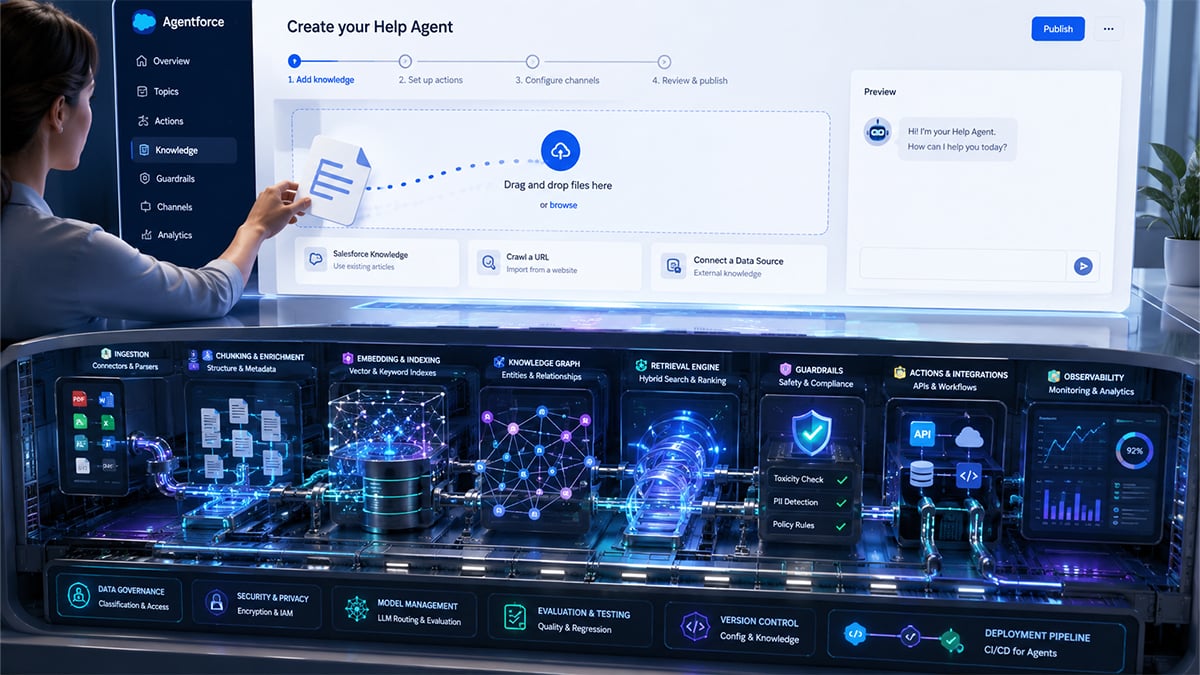
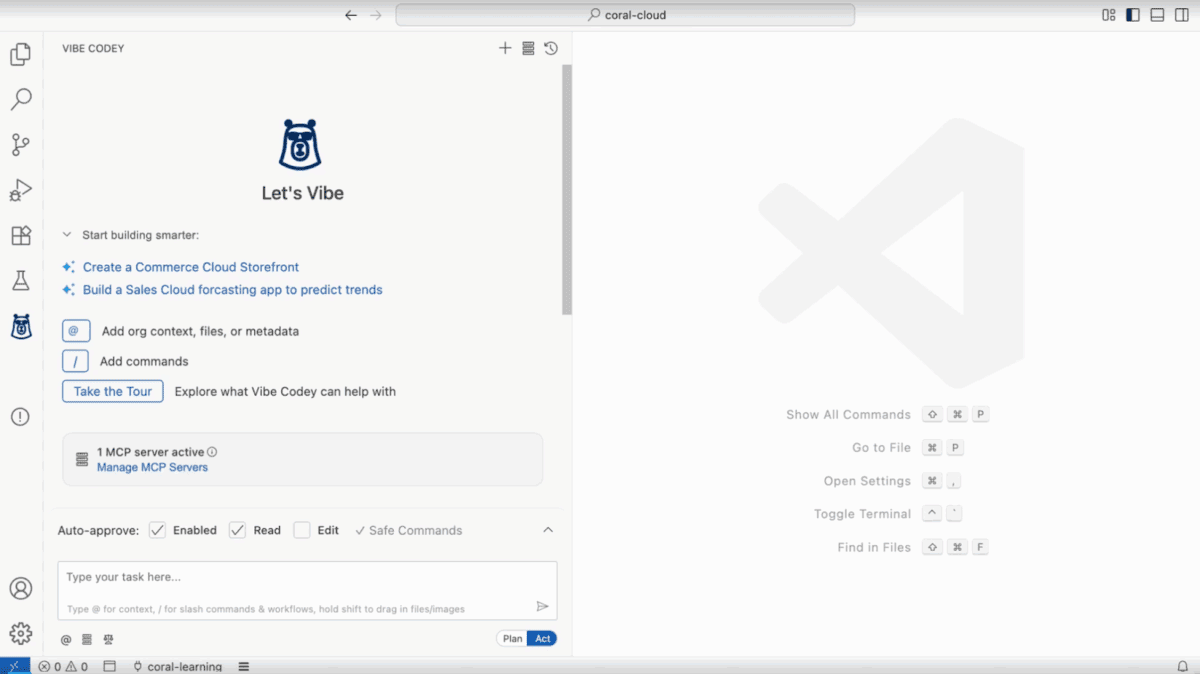
Agentforce Vibes represents a far more complete vision than its predecessor. Natural language can now be used to plan, build, test, deploy, and observe applications, effectively creating an end-to-end ALM workflow. More than forty MCP tools are available out of the box, giving teams the ability to interact with metadata, manage DevOps tasks, and perform testing without ever having to leave the environment.
One practical example is the Lightning Web Components MCP, which can automatically introspect a component’s behavior and generate Jest tests on the fly. Instead of requiring developers to hand-write assertions for common scenarios (such as making sure both a username and password field are required before a submit button activates), the MCP builds those checks automatically. For Trailblazers, this means that repetitive, error-prone testing steps are handled by the platform, freeing them to focus on application logic and business requirements. What once demanded specialized JavaScript knowledge is now within reach of admins and analysts who would never have called themselves testers, but who can still validate critical functionality.
Testing is no longer an afterthought. Vibes includes the ability to generate and execute both unit-level and functional tests, tying results back to original requirements. This closes a critical gap that often left Salesforce developers to rely on external tools. At the same time, Salesforce has ensured that the Vibes environment is not just convenient but also safe. Every action runs within the Salesforce trust layer, which means enterprise data does not leave the platform boundary.
As Dan Fernandez, Vice President of Product for Developer Services, described in our briefing, the combination of natural language generation with compliance and DevOps guardrails is intended to “democratize development” while still respecting the realities of enterprise governance.
Adoption and Early Signals
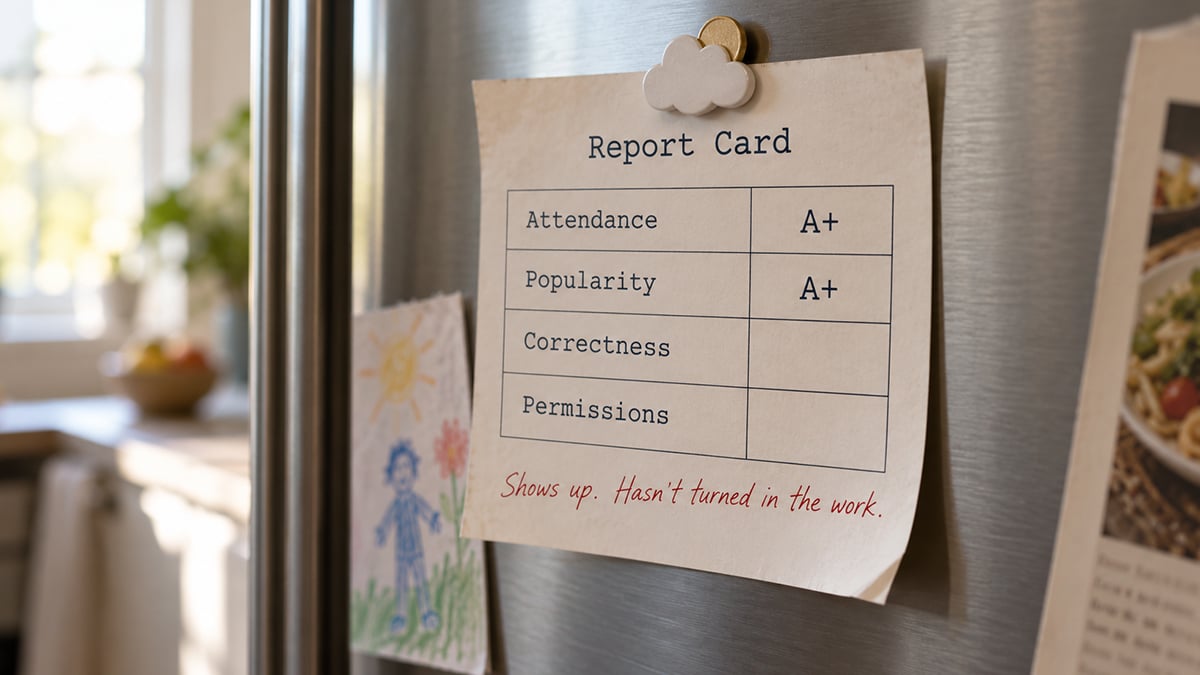
Salesforce has shared encouraging adoption data. More than 40,000 monthly active users are already working with vibe coding tools, and collectively they have accepted over one million lines of AI-generated code into production. For some customers, between 20 and 25 percent of their new code base now originates from AI-assisted generation. These numbers demonstrate momentum, but they also raise questions about long-term sustainability. How much of that generated code stands up to enterprise-grade standards? And how much ongoing maintenance will these organizations face over time?
Implementation Challenges
While the vision is compelling, several challenges stand out. The first is the learning curve. Vibe coding appears effortless in a demo, but the “cognitive cliff” that comes with tools like Data Cloud remains steep. Non-developers may be able to generate working code, yet deploying it responsibly in a production environment still requires expertise.
Governance is another concern. Enterprises with well-defined ALM practices will find that Vibes reinforces their pipelines, but organizations without that maturity may find themselves accelerating app sprawl. Salesforce emphasizes reuse over rebuild, but that cultural discipline is not universal, and without it the promise of faster delivery could simply produce more fragmented systems.
50 Requests Per Day
Vibes includes an allocation of fifty GPT-5 requests per org per day, with a secondary model available once that quota is reached. For many teams this represents a meaningful starting point, especially given that Salesforce is bundling AI capacity directly into the developer experience rather than treating it as an add-on. Still, history matters: Salesforce has stumbled before with complex or costly AI pricing models, and enterprises will be watching closely to see whether usage tiers scale fairly as adoption grows. Until long-term pricing is clarified, CIOs are likely to remain cautious about making Vibes central to their development pipeline.
Finally, there is the competitive reality. Many developers already rely on VS Code with GitHub Copilot, or emerging tools like Cursor and Replit Agent. These ecosystems move quickly and command strong loyalty. Salesforce’s advantage lies in Vibes’ ability to understand an org’s metadata and enforce trust boundaries, but whether that will outweigh the flexibility of more established developer-first platforms is an open question. Enterprises risk both overreliance on Salesforce’s AI guardrails and resistance from developer teams who prefer their existing workflows.
The ultimate question is whether enterprises will adopt Vibes beyond demos. Developers will want to know if it truly outperforms their existing Copilot and VS Code setups. Admins and analysts will test whether they can build safely without exposing the organization to risk. IT leaders will scrutinize whether Salesforce’s guardrails can actually prevent the app sprawl problem that has plagued every new generation of low-code platforms.
Analyst Take
Agentforce Vibes is best understood as a consolidation of Salesforce’s developer experience under the larger “agentic enterprise” umbrella. The breakthrough is not the rebrand itself but the fusion of natural language interfaces with ALM, testing, and governance. Salesforce has been laying the foundation for years; with Vibes, those pieces finally converge.
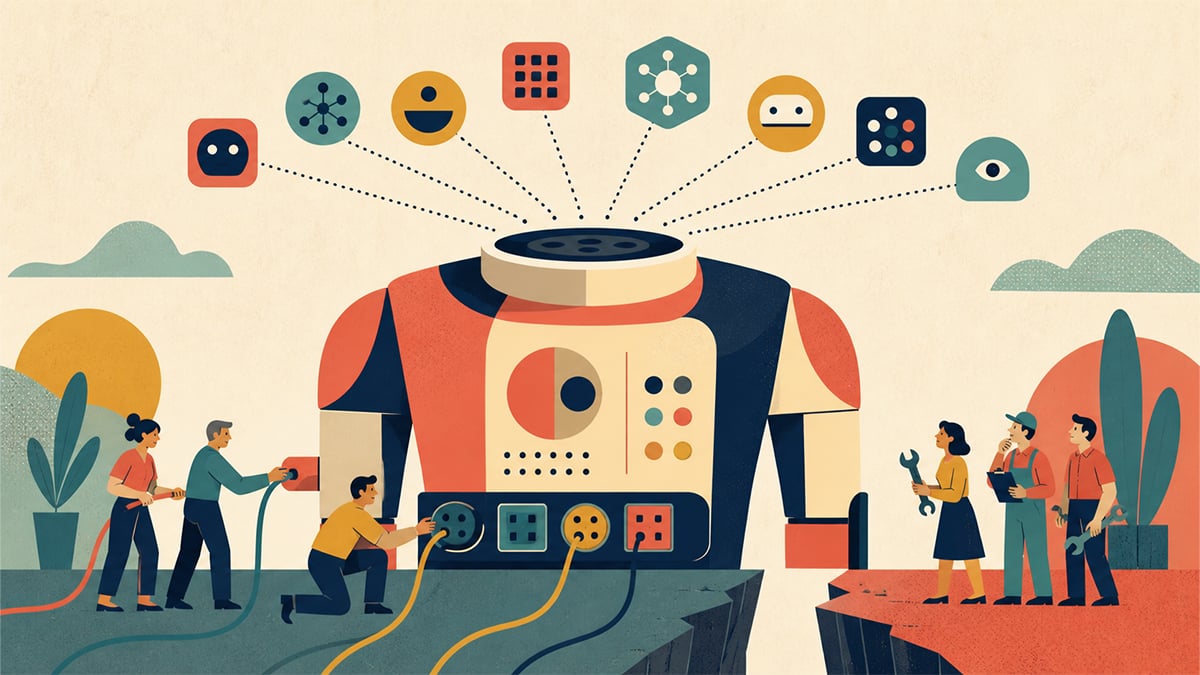
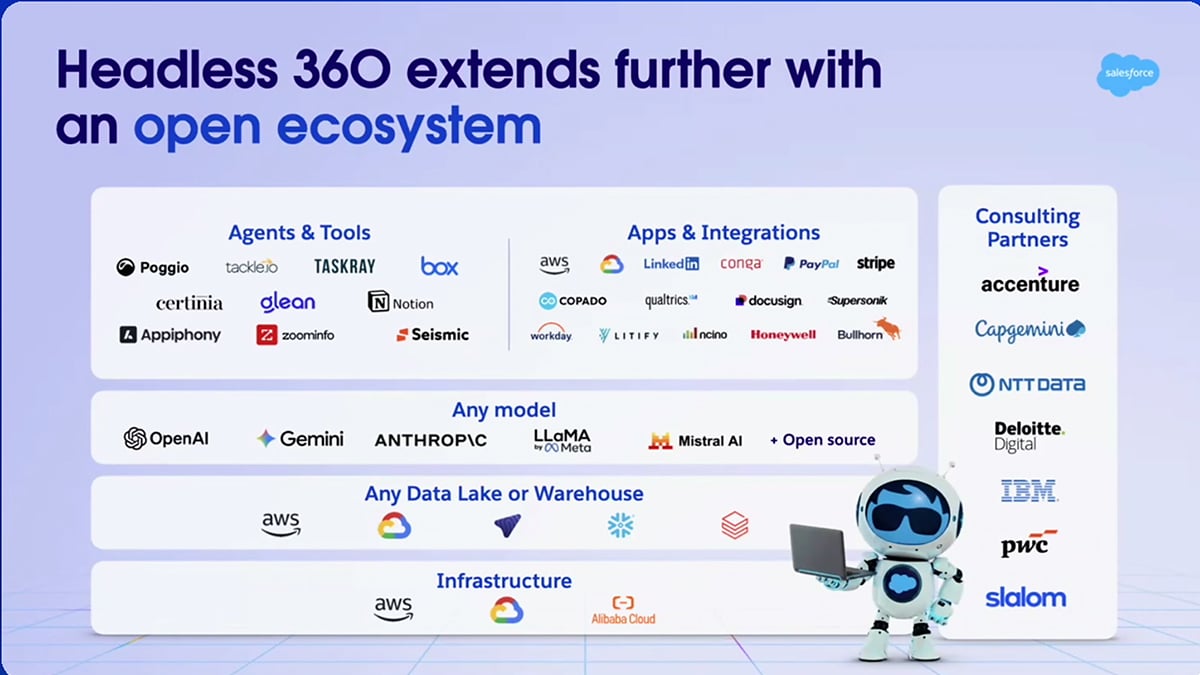
The other significant move by Salesforce is to open up all of their DevOps management stack more via multi-function MCP server. This is consistent with other major platform and DevOps companies, so it is nice to see Salesforce providing leadership in open systems.
If MuleSoft Agent Fabric was about infrastructure for AI agents, and Slack’s Agent Ready APIs were about conversational entry points, Agentforce Vibes is about embedding agentic capabilities directly into the development lifecycle. The excitement is justified, but there are still hurdles to clear. To succeed, Salesforce must prove that vibe coding is not just a faster way to generate code, but a safer, more sustainable path to enterprise-scale development.