Rohan Kumar Interview: Inside Salesforce’s Headless 360 Expansion
Salesforce’s new platform and engineering chief delivers the goods promised at TDX — and previews an “Enterprise Harness” he intends to turn into a product. But the Builder Gap I called out in April is still waiting for its bridge.
SAN FRANCISCO — August 19, 2026 — Four months ago at TDX, Salesforce announced the most significant architectural pivot in its history and called it Headless 360. I wrote at the time that the announcements were the factory floor for the agentic enterprise — and I asked whether Salesforce would deliver, and for whom.
Today, half of that question got answered. Salesforce consolidated a Headless 360 rollout that has been landing steadily since TDX — GA milestones now spanning its major product families, with key pieces still in beta — and I sat down one-on-one with the executive responsible for the platform and engineering foundation beneath it: Rohan Kumar, Salesforce’s President and Chief Platform and Engineering Officer.
Kumar sat down with me just days after the August 5 leadership shuffle that expanded his remit. He joined Salesforce in June as President and Chief Platform Officer after 28 years at Microsoft, where he ran Azure Data and, most recently, Microsoft’s security platform and Purview business. Two months later, when 14-year engineering chief Srini Tallapragada stepped down to a special-advisor role, Kumar absorbed the engineering duties too. His remit now combines the platform role he assumed in June with Tallapragada’s engineering responsibilities — a change landing just months after former product chief Steve Fisher moved to advisory in May, leaving Salesforce’s technical leadership substantially reshaped in a single season. When I put the “big shoes” framing to Kumar directly — stepping in for Fisher and Tallapragada — he didn’t quarrel with it.
“It’s obviously big shoes to fill, and I’m pretty excited,” Kumar told me. “It’s a huge opportunity, and one of the reasons I’m here is because I fundamentally believe that Salesforce is going to be one of the key platform vendors in this transition.”
Big shoes, big portfolio, and — as of this morning — a big delivery ledger to defend. Let’s audit it.
Table of contents
The Rolling Thunder Ledger
At TDX in April, Headless 360 was a declaration of ambition: everything on Salesforce becomes an API, an MCP tool, or a CLI command. Today’s announcement is the follow-through — and it is rolling thunder in the literal sense: a staggered rollout that has been landing since spring, now consolidated into one architecture statement.
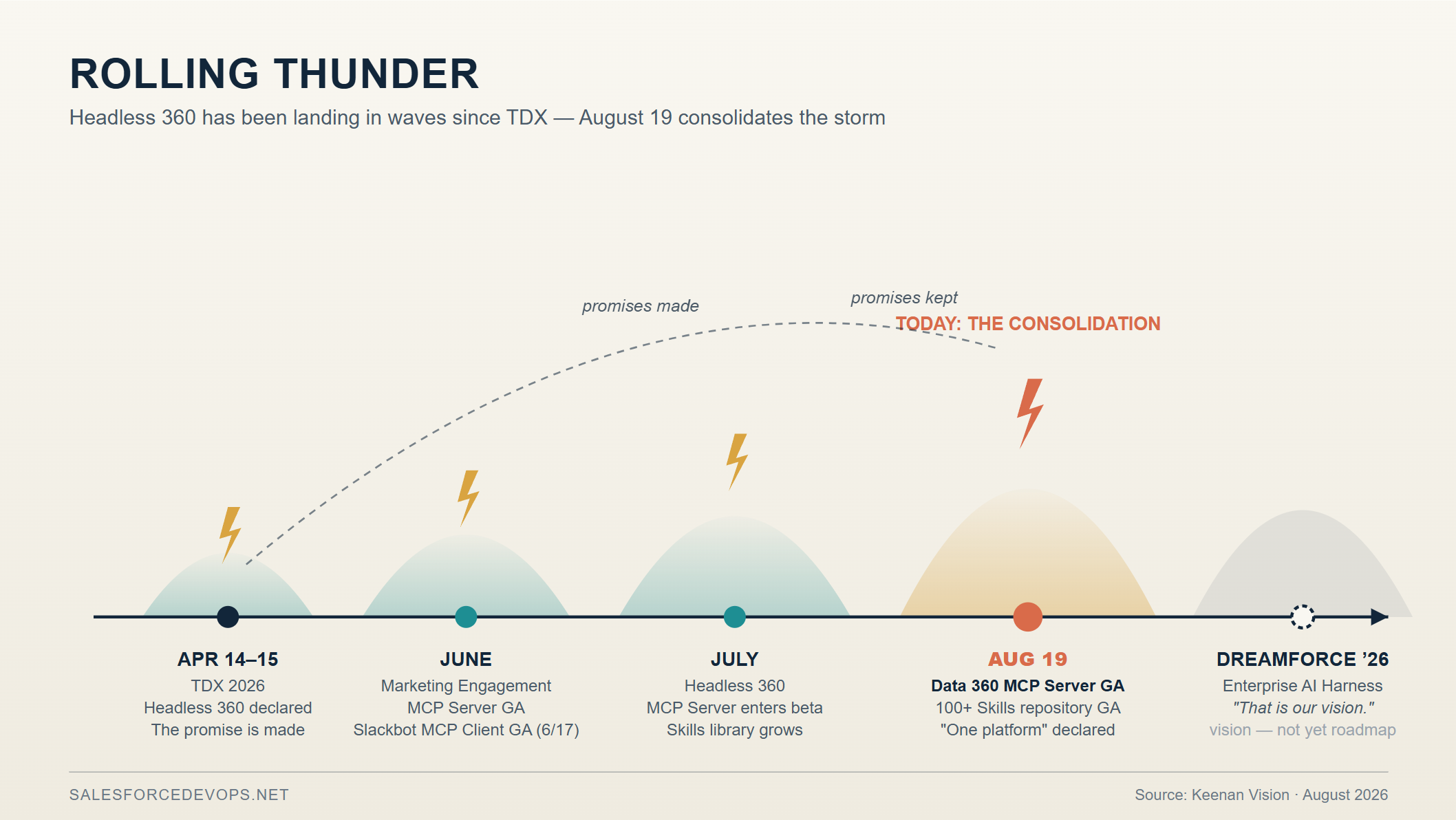
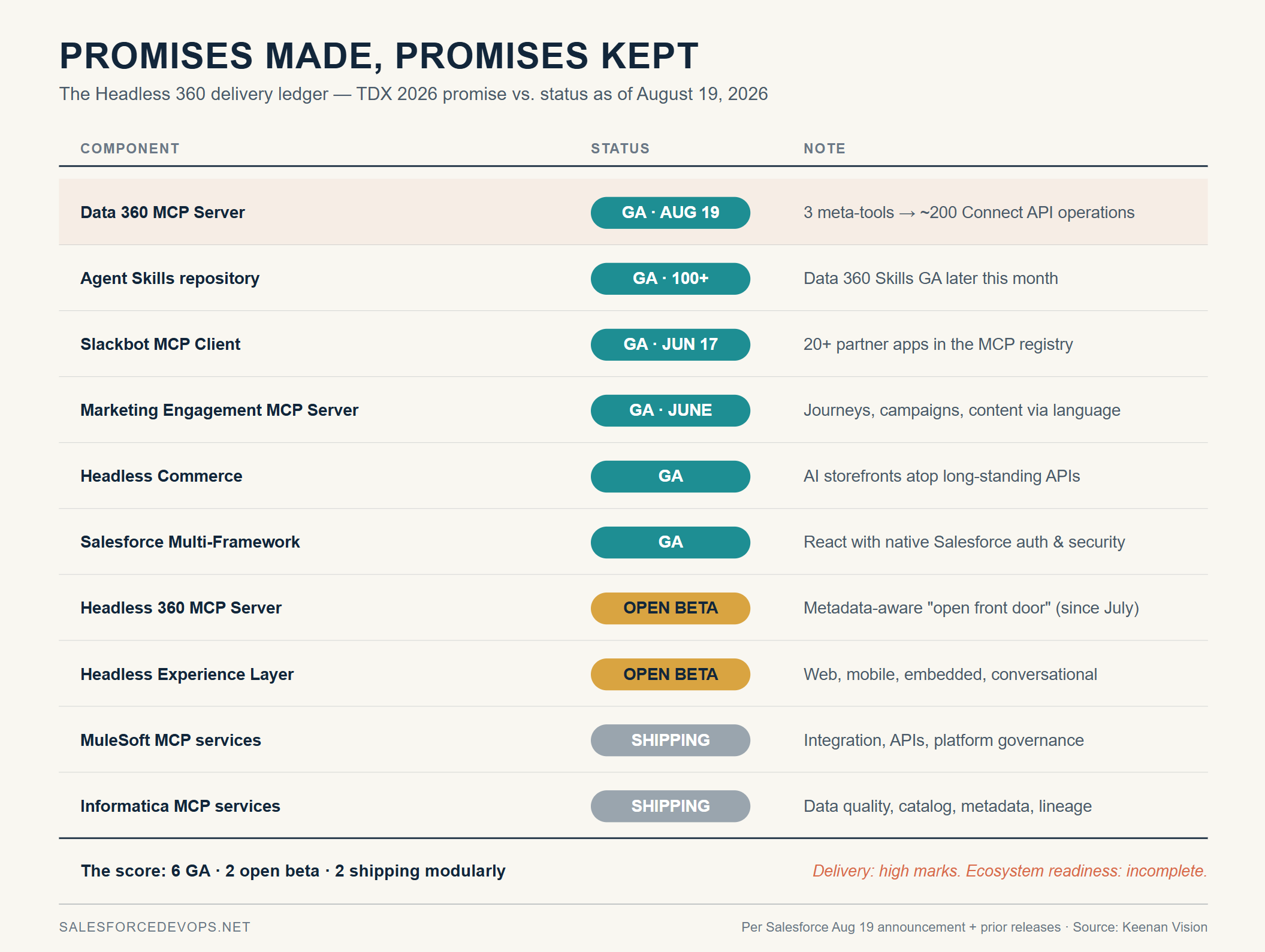
Slackbot’s MCP client went GA on June 17. The Marketing Engagement MCP server reached GA in June. The Headless 360 MCP Server itself entered beta in July. What August 19 adds is the Data 360 MCP Server’s general availability, the completed 100+ Skills repository, and — the real news — the assertion that the pieces now constitute one platform. Here is the promises-made, promises-kept scorecard:
| TDX 2026 Promise (April) | August 19 Status | What It Does |
| Headless 360 MCP Server | Open beta: (since July) | The “open front door” — metadata-aware discovery and invocation of Salesforce capabilities from any MCP client |
| Data 360 headless access | GA today: Data 360 MCP Server | Three meta-tools give agents discoverable access to nearly 200 Connect API operations — from query endpoints to fully programmatic actions |
| Slackbot as MCP client | GA (June 17) | Slackbot connects to all Salesforce MCP servers plus 20+ partner apps (Atlassian, Box, Canva, Docusign, Notion, Zoom) |
| Agent Skills ecosystem | GA: 100+ Skills repository | Packaged orchestration, validation, and business logic across several collections; Data 360 Skills GA later this month |
| Marketing headless | GA: (June) Marketing Engagement MCP Server | Journeys, campaigns, data extensions, content via natural language |
| Commerce headless | GA: Headless Commerce | Extends Salesforce’s long-standing headless commerce APIs with AI-powered storefronts and developer-agent tooling |
| Custom UI / React support | GA: Salesforce Multi-Framework | React apps with native Salesforce auth, security, and data access |
| Experience rendering layer | Open beta: Headless Experience Layer | Web, mobile, embedded, and conversational experiences on one logic layer; HXL Widgets, Channels, and a Widget Builder signaled for GA at Dreamforce |
| MuleSoft MCP services | Modular services shipping | Integration, APIs, and platform governance as reusable MCP services |
| Informatica MCP services | Modular services shipping | Data quality, metadata, catalog, and governance as reusable MCP services |
Statuses per Salesforce’s August 19 announcement and prior product releases. Availability varies by region and product; pricing and packaging subject to change.
That is a lot of checkmarks in four months. Salesforce says early customers are already converting the architecture into outcomes — the company cites Engine launching its EVA support agent in 12 days, now resolving half of customer chat interactions. That’s a vendor-supplied figure Salesforce has been citing since April, and I can’t independently verify it. The directional logic, though, is sound: when a platform exposes governed capabilities instead of raw endpoints, time-to-production compresses.
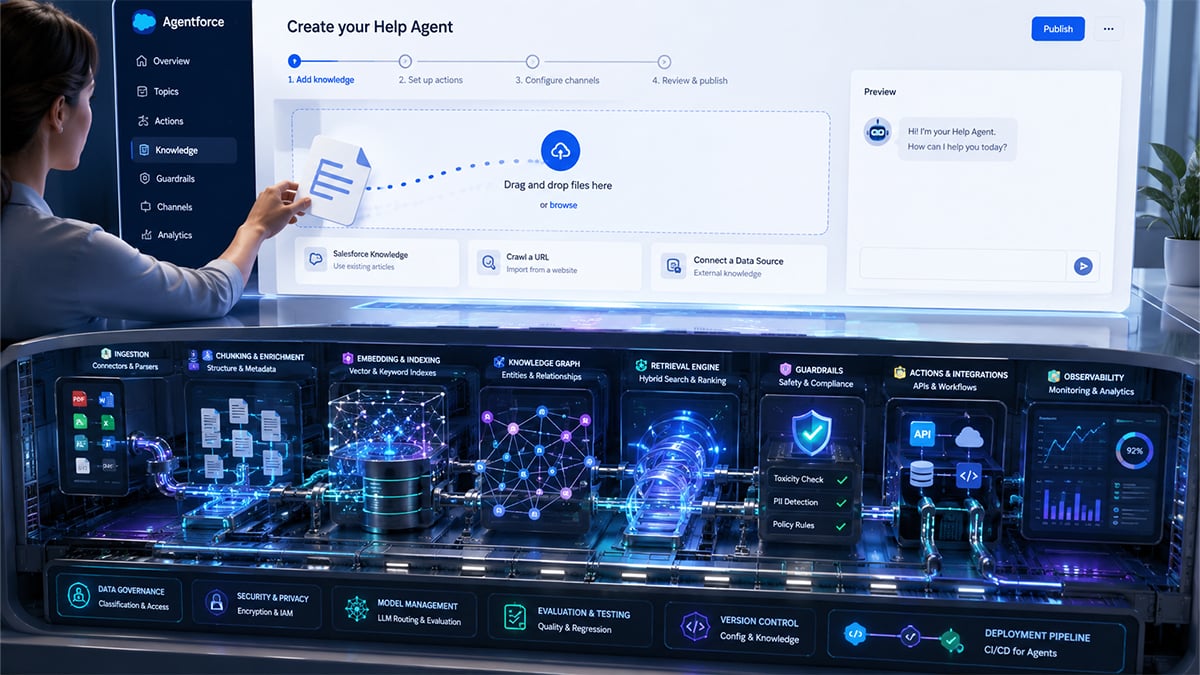
The technical centerpiece is the Data 360 MCP Server going GA. Until now, headless access to Data 360 mostly meant querying customer data. The new server moves to fully programmatic action — and it does so with a token-efficient architecture worth understanding: three meta-tools (search, payload_examples, and execute) let agents discover and dispatch to what Salesforce counts as nearly 200 underlying Connect API operations at runtime, rather than loading every tool definition up front. In practice, authorized agents can build semantic models, transform data, generate calculated insights, inspect identity graphs, create segments and activation targets, and stand up new data streams through natural language, with prebuilt Skills wrapping the most common workflows. One operational note for budget owners: those MCP calls consume the underlying Connect API limits and Flex Credits. Headless convenience, metered economics.
Kumar’s explanation of why this matters is the sharpest articulation of the context-economics argument I’ve heard from a Salesforce executive:
“Why are agents becoming so inefficient and expensive? Because they’re operating at a data layer that is not curated well, so they have to do a lot of work just to get to the right point,” he said. “With the knowledge layer inside Data 360 — the context layer — we pre-create that, so agents don’t have to spend a lot of time and money doing it themselves, while ensuring agent identity, data security, trust, and observability are maintained.”
That’s not a feature pitch. That’s a unit-economics pitch, and it’s the right one. Token costs are becoming the new cloud bill, and curated context is how you bend the curve.
The Elevator Pitch, From the Top
I asked Kumar for his framing of the whole strategy. His answer is worth quoting at length, because it’s the clearest statement yet of what Headless 360 is actually for:
“The vision we have around the transition to the agentic enterprise is: how do you get these agents to become more and more powerful, in a secure and trusted manner, so they can actually augment the human practitioner? When you dissect that, headless becomes a very obvious strategy,” he said. “Today, humans go to tools like Lightning and execute workflows. Salesforce has a very extensible data model, even in the core platform, that gets augmented by ISVs and custom applications. How do you capture not just the data and the knowledge, but the entire workflow logic, so agents can benefit by leveraging all of it through headless APIs?”
Note what’s embedded in that answer: the tacit knowledge argument. The value isn’t the API surface — it’s the twenty years of workflow logic, validation rules, and business process encoded in customer orgs. Regular readers know I’ve spent two years arguing that capturing tacit organizational knowledge is the unsolved problem of the agentic enterprise. Hearing the platform chief make workflow-logic capture the payload of the strategy, not a side effect, is a meaningful signal.
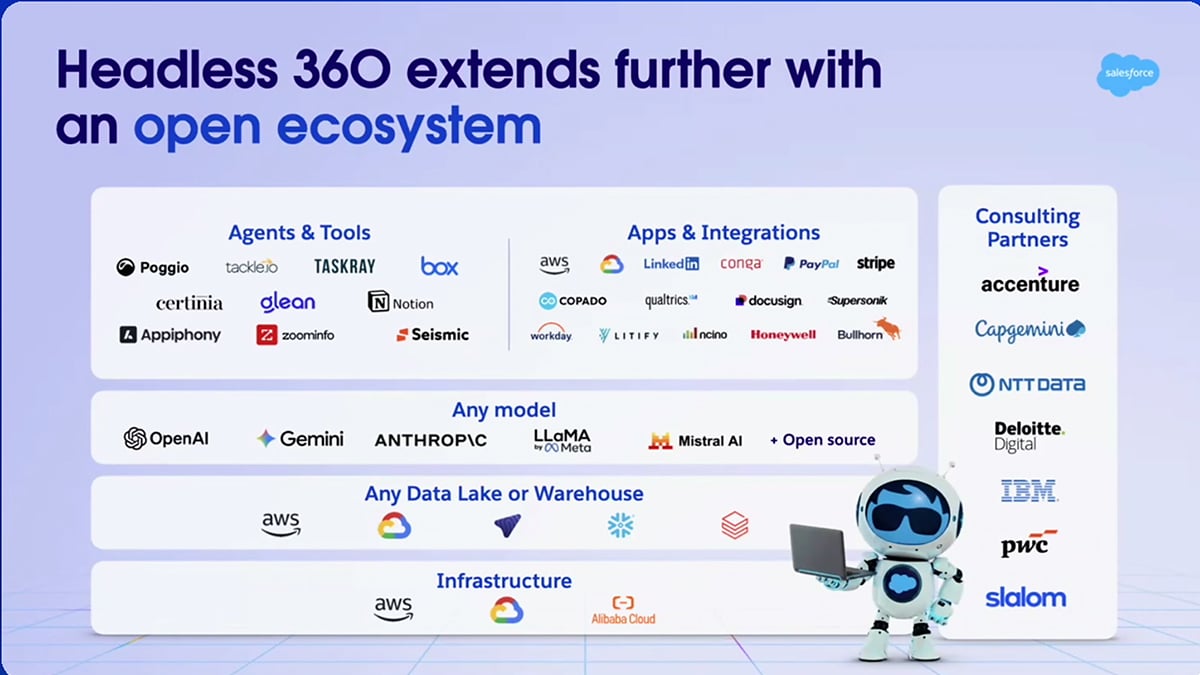
And Kumar was emphatic that the payload travels beyond Salesforce’s own surfaces: “Our customers use Claude, Claude Code, ChatGPT, Microsoft Teams, Google, Amazon — there are several interfaces getting built out. The beauty of headless is that we’re packaging this entire value across several different products, and you can leverage those APIs in any of these interfaces. We have options of our own, but we are not locking these APIs down to only Salesforce.”
That’s the co-opetition posture I documented in June, now stated as engineering doctrine by the engineering chief. Salesforce is betting its biggest architectural shift on MCP — a protocol Anthropic invented — and shipping its crown-jewel capabilities into rival front ends on purpose.
The Enterprise Harness: From Metaphor to Roadmap
When I asked Kumar what to watch for at Dreamforce, he didn’t name a product. He named an idea — one he floated in a LinkedIn essay published Sunday.
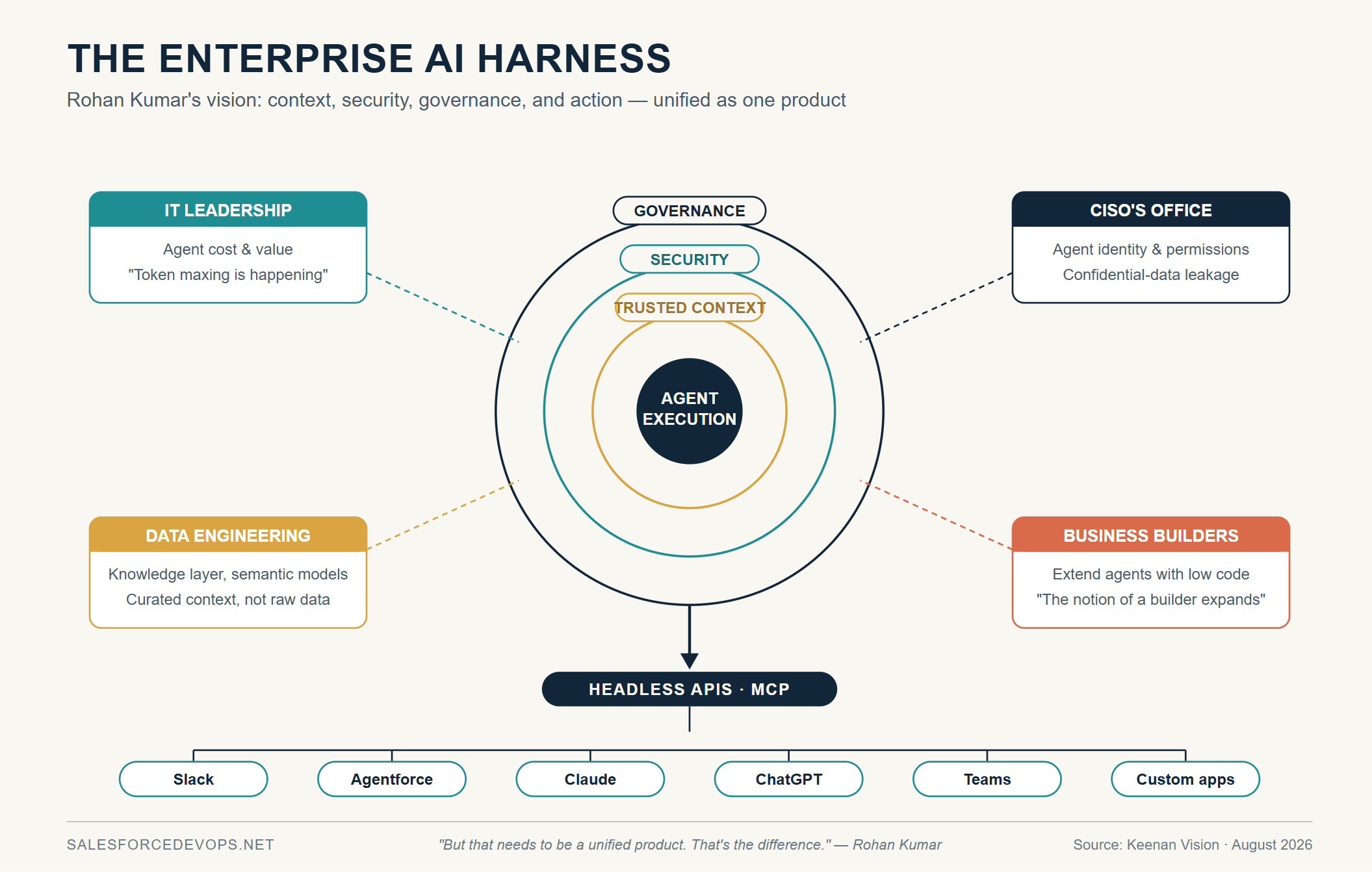
“If you start putting the pieces together, there’s this whole notion of the enterprise harness that is becoming very powerful,” he said. “When people typically think about a harness, they think about the build piece — where the code gets written, the observability, the runtime. The vision I’m outlining is a lot more comprehensive. It’s not just the execution of the agent. It’s the enterprise context. It’s the security. It’s the governance. All of that is the harness — everything coming together. And through headless APIs, you can make that harness available in lots of different interfaces.”
What makes Kumar’s harness different from the developer-tooling usage of the term is that it’s organizational as much as technical. He walked me through it role by role:
“As agent sprawl happens, what is IT most concerned about? Cost and value — I’m spending all this money running these agents, token maxing is happening. The CISO’s office: what’s the identity of these agents? Are they going to do things they’re not supposed to? Are they going to leak confidential data? The data engineer is focused on creating that knowledge layer — think semantic models — so when agents call the APIs, they work efficiently instead of recreating knowledge from raw data. Every role in the enterprise is going to evolve, and when we talk about the harness, it’s about the completeness of all that change coming together.”
I told him it sounded less like a product architecture and more like a McKinsey-grade operating-model plan — a center of excellence blueprint for how IT, security, data, and business builders collaborate in the agentic era. He didn’t flinch.
“But that needs to be a unified product,” Kumar said. “That’s the difference.”
So Salesforce intends to productize the harness? “That is our vision.”
Label this clearly: it’s a vision, not a roadmap. No SKU, no dates, no packaging. But it’s the most important sentence in the interview, because it tells you where Dreamforce is headed — and it reframes today’s news. Every MCP server Salesforce ships is another surface where enterprise context, permissions, and governance must travel with the work. The rolling thunder creates exactly the sprawl problem the harness proposes to solve. That’s either elegant sequencing or a treadmill, and which one it turns out to be is the platform story of the next twelve months.
The experience layer, by contrast, does have a roadmap. In a pre-Dreamforce webinar, Salesforce product leaders laid out plans for the Headless Experience Layer to graduate from beta at Dreamforce: HXL Widgets, HXL Channels spanning Lightning, Slackbot, Teams, ChatGPT, and Claude (with Gemini to follow), a no-code HXL Widget Builder, and Micro-Frontends targeting GA, plus Angular support entering beta alongside the already-GA React Multi-Framework. So read the September keynote this way: the rendering layer arrives with dates attached; the harness arrives as doctrine.
The Builder Gap: “I Can Confirm It’s Not Landing”
Now for the accountability portion of the program.
In April I wrote that Headless 360 widened the Builder Gap — the split between a new generation of AI-native, pro-code developers being actively recruited to the platform, and the Trailblazer community of admins and declarative builders who built the ecosystem and are watching its center of gravity shift toward tooling they weren’t trained on. I put that directly to Kumar: as a developer, I told him, headless is glorious. As a Trailblazer whisperer, it’s another jarring release that makes the community wonder how committed Salesforce is to them. Most Trailblazers are not Claude or ChatGPT experts, and they cannot effectively use the Headless 360 components without far more help on why these tools matter and how to fold them into their own customization work.
To his credit, Kumar engaged rather than deflected.
“Maybe we need to do a better job of clarifying this, but I think it’s a hugely important step for the Trailblazer community as well,” he said. “There are two aspects of how agent building is going to happen. One is pro code — you look at the Agentforce runtime, pick the language of your choice, and code out agents that use these APIs. Then there are our Trailblazers — Salesforce admins and low-code developers who are used to things like Flow — who can extend agents. We ship a sales agent, a service agent, Agentforce Coworker. These are extensible through the platform, and you don’t need to be a pro-code developer to get value there.”
He went further: “One of my fundamental beliefs is that the notion of a builder significantly expands with this transition. With the nearly 200 new APIs we’re launching for Data 360, how do we make sure that value is not restricted to a small set of developers in the enterprise, but reaches the broader low-code population — so they can extend Agentforce Coworker and Slackbot in meaningful ways to get their work done?”
I told him plainly: I can confirm the message is not landing.
“If that message is not landing, that’s an opportunity for us to go improve it,” Kumar acknowledged. “We absolutely have the Trailblazers in mind. With the investments we’re making, we want to provide the tools for them to advance their careers.”
And when I pressed on the deeper issue — the cognitive overload of a platform shipping new paradigms faster than any practitioner community can absorb them — he conceded the point while reframing it:
“That is fair. If you look at the raw number of products — and frankly, I think it’s an industry problem, not just Salesforce. Historically, silos were okay for enterprises. That’s how we functioned: specialization in specific domains, and people got used to working a certain way. AI breaks those silos down, and the moment that happens, there’s cognitive overload. Multiple functions that historically operated separately now have to collaborate. That creates a healthy tension, which I think is good. As we get past it, the true value of AI is going to be realized.”
Here’s my honest scoring of that exchange. Kumar’s low-code counterargument is real: the 100+ packaged Skills are Salesforce’s first concrete answer to a complaint I’ve been making all year — that the ecosystem has enormous API availability and very little direction on what to do with it. Skills wrap raw capability in opinionated, governed workflows. That genuinely lowers the cliff face.
But an answer is not a program. To be fair, Salesforce has begun filling the education gap: Trailhead now carries an “Introduction to Salesforce Headless 360” quick-look badge, a hands-on beta badge, and Headless 360 material inside the Agentblazer Innovator curriculum. There’s also a genuinely low-code tool on the horizon: Salesforce’s Julie Thompson describes the forthcoming HXL Widget Builder as a way to “get away from the coding side” of agentic building — a real plank, though it addresses building experiences, not the harder crossing from declarative administration to agent architecture. Look closer, though, and even the introductory badge is tagged for the Developer role. What’s still missing is exactly what was missing in April: a coherent role-transition program that takes an experienced declarative builder from Flow and conventional administration to MCP architecture, agent testing, and cross-surface governance.
Part of the problem is structural: the communities of practice that carried Trailblazers through every previous platform transition — a decade of blogs, user groups, and conference hallway wisdom for Sales and Service Cloud — cannot form fast enough when the products reinvent themselves quarterly. There is no accumulated searchable folk knowledge for a platform that ships this fast. That isolation, not any single missing feature, is what the community is feeling. Kumar’s “healthy tension” framing is honest, and his message-improvement promise is welcome. The Builder Gap remains open, and the remediation plan remains unwritten. I’ll be looking for it at Dreamforce, right next to the harness.
The Bottom Line
Score today’s release on delivery, and Salesforce earns high marks: the TDX architecture is now substantially GA, spanning data, marketing, commerce, integration, and the Slack surface, with an unambiguous open-standards posture. Score it on ecosystem readiness, and the grade is incomplete — the same incomplete as April.
For CIOs and mid-market operators, three practical readings:
What’s real today versus what’s vision. Data 360 MCP, Slackbot MCP Client, Marketing Engagement MCP, Headless Commerce, and Multi-Framework are GA and deployable now. The Headless 360 MCP Server and Experience Layer are beta. The Enterprise Harness is a stated ambition with no product timeline — plan around the shipping components, and treat the harness as a Dreamforce watch item, not a procurement line.
Every new surface is a governance obligation. The value proposition — same identity, permissions, and business logic everywhere agents work — is also the risk register. Hosted MCP calls run as an authenticated user, with CRUD, field-level security, and sharing rules enforced; but third-party clients layer on their own OAuth scopes, approval flows, and data-retention behavior. Before you light up agents in Claude, ChatGPT, or Slackbot against your org, validate the effective access path end to end — because headless access preserves Salesforce’s controls while making misconfigured permissions exercisable at machine speed.
Your team composition is the constraint, not the technology. The capabilities shipping today assume someone in your organization can evaluate MCP architectures, prompt and test agents, and define governance boundaries. If your bench is all declarative builders, the platform just moved faster than your people.
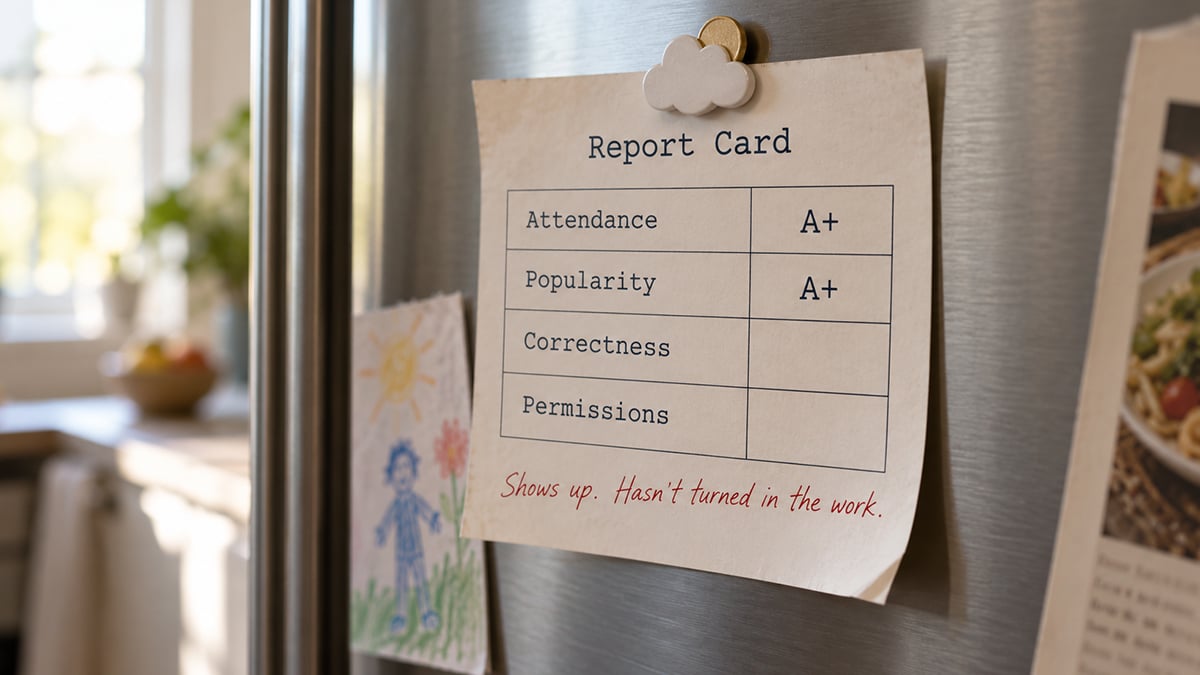
Which leads to your one measurable action: before Dreamforce, run a one-page skills audit against today’s ledger — for each of the ten Headless 360 components, name the person on your team who can deploy it, or mark it not applicable to your business. Every blank cell that isn’t an N/A is your organization’s Builder Gap, measured. Bring that page to Dreamforce and make Salesforce show you the bridge.
Promises made, promises kept — on the technology. The people promise is still on the table, and now it has Rohan Kumar’s name on it.
Vernon Keenan is CEO of Keenan Vision LLC and publisher of SalesforceDevops.net. Disclosure: Keenan Vision is a paid advisor to Salesforce and to other companies across the enterprise software and AI ecosystem. The views expressed here are the author’s own and were developed independently of those relationships. Quotations have been lightly edited for clarity.