Copado ‘Org Intelligence’ Brings Metadata Awareness to Conversational DevOps
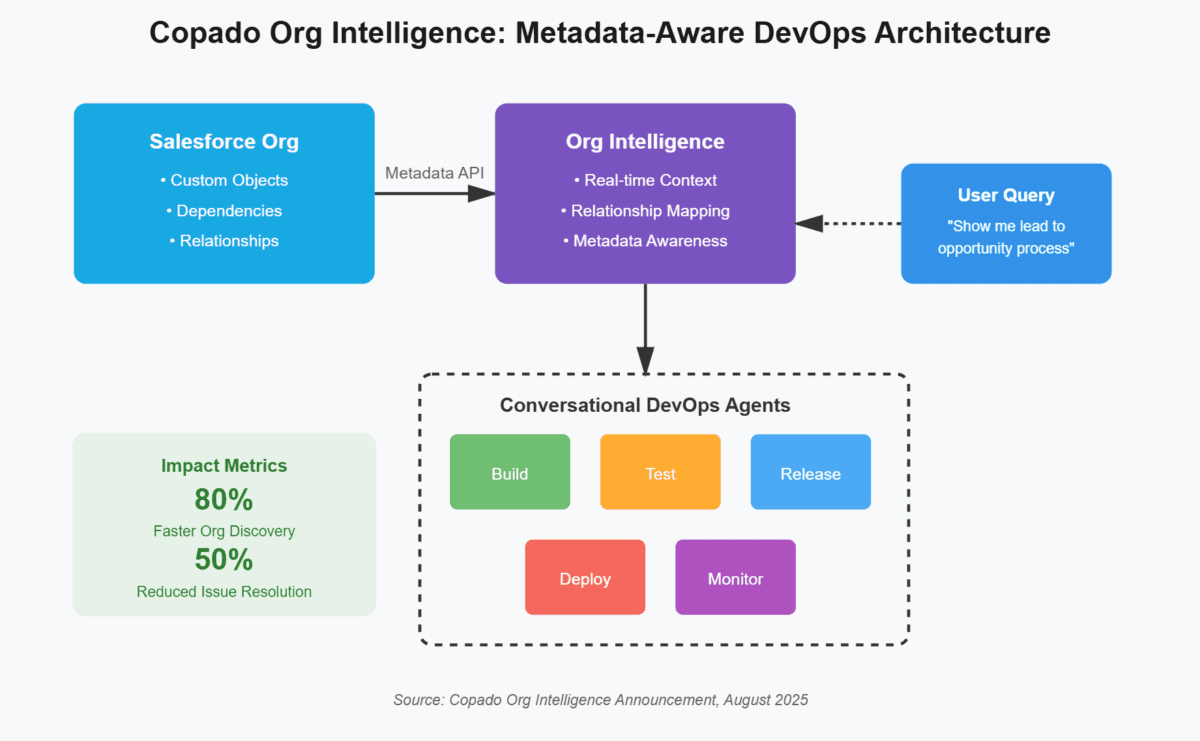
Copado’s latest announcement introduces Org Intelligence, a new feature in its AI-powered DevOps platform. Positioned as a step toward end-to-end visibility into Salesforce environments, Org Intelligence enables Copado’s existing DevOps “agents” to work with richer, metadata-aware context. Turn the feature on, and Copado queries the Salesforce Metadata API, generates relationship diagrams, and incorporates that information into conversational interactions with build, test, and release agents.
From a purely architectural perspective, this is a meaningful upgrade. By allowing Copado’s agents to “see” the org in real time, the platform gains a deeper understanding of customizations, dependencies, and relationships. But for everyday Salesforce DevOps practitioners, especially in smaller RevOps-style teams, the impact is more foundational than transformative—it doesn’t yet redefine their day-to-day release management workflows.
Table of contents
A Step in a Larger Industry Shift
While this announcement is more about platform plumbing than user-facing breakthroughs, it aligns with a broader trend: Salesforce DevOps tools are moving closer to the conversational layer.
Recent examples include:
- Salesforce’s MCP Server for CLI developers
- Cirra AI’s MCP Server for Salesforce admins
- Copado’s conversational org-awareness now embedded in its agents
“We’re laying the foundation,” said Gloria Ramchandani, SVP of Product at Copado. “By giving our agents real-time awareness of your Salesforce org, we’re making it faster and safer to build with confidence—no more guesswork when you touch production.”
This trend points to a hybrid model in the making. This is where conversational, CLI, and GUI operations coexist. In such a model, DevOps responsibilities could stratify: some specialists will orchestrate workflows through conversational interfaces, others will remain deep in CLI scripting, and others will manage GUI-first configurations.
Cognitive DevOps Context
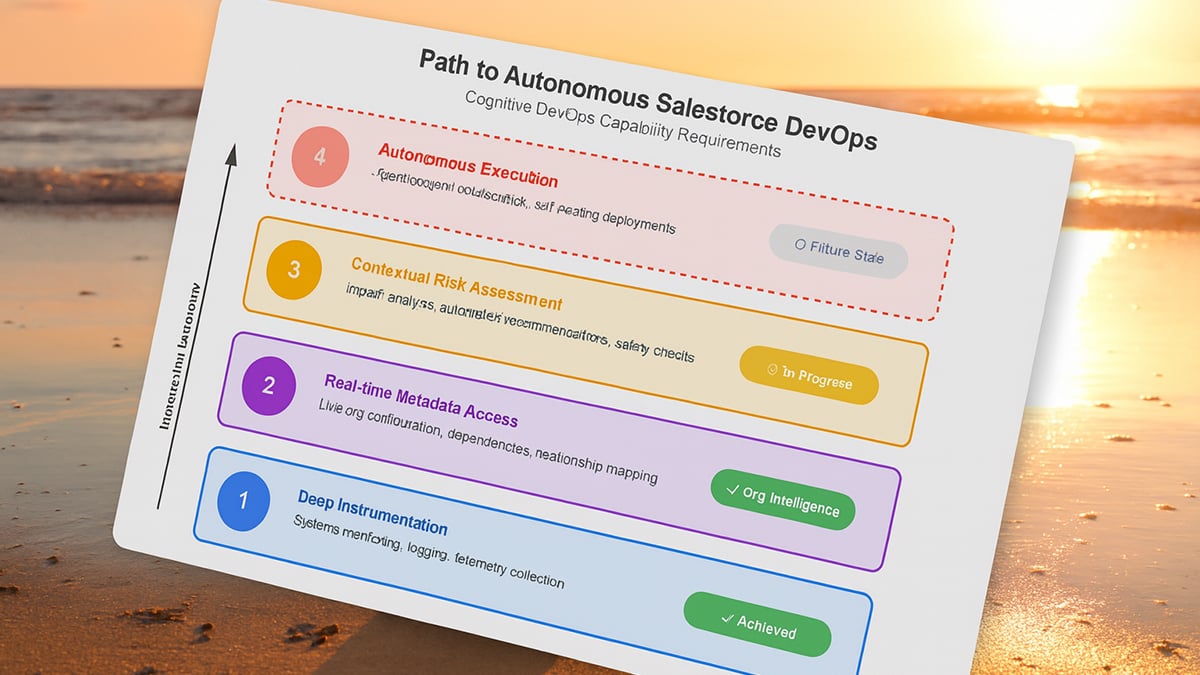
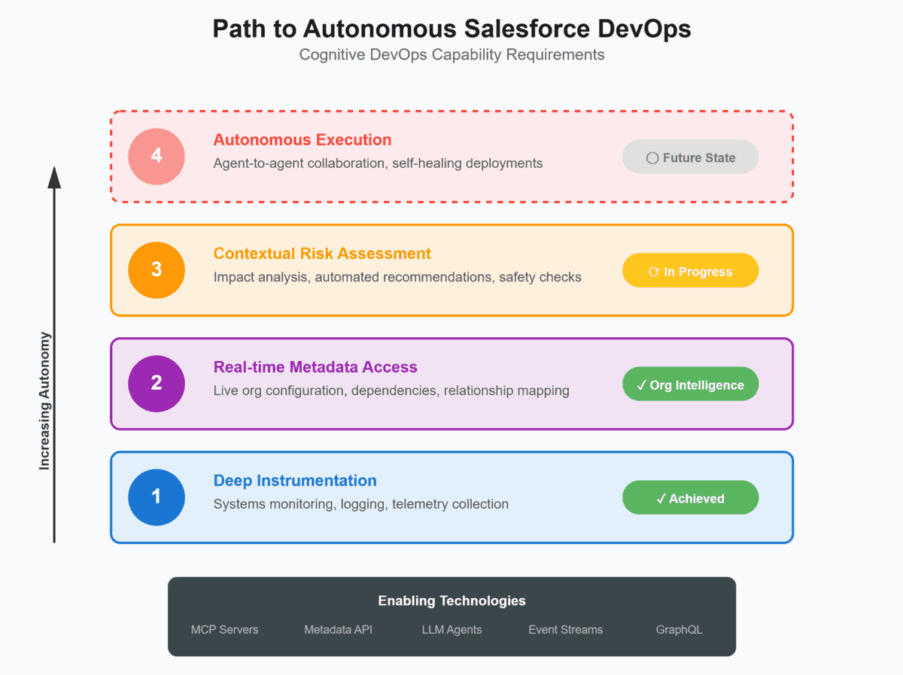
In the Cognitive DevOps framework we track at SalesforceDevops.net, autonomous or semi-autonomous DevOps is the north star: human practitioners directing a swarm of specialized agents to handle the full Salesforce SDLC and runtime operations.
To reach that point, agents need:
- Deep instrumentation of the systems they manage
- Real-time access to relevant metadata and configurations
- The ability to surface risks and recommend actions contextually
“With Org Intelligence, we’re cutting org discovery time by as much as 80% and reducing production issue resolution by half,” Ramchandani noted. “That means less time hunting for context and more time delivering features.”
Org Intelligence delivers on that first requirement for Copado’s platform. It can answer questions like “Show me the lead-to-opportunity conversion process” or “Map the dependencies for this custom object” without manual digging. While the feature stops short of autonomous change execution, it sets the stage for agent-to-agent collaboration over MCP-based infrastructures—whether that’s inside Slack, VS Code, or other preferred environments.
The Cognitive Devops Shift
Copado frames Org Intelligence as a foundation rather than a finished solution. The company expects to layer on more capabilities, such as automated metadata relationship mapping, repository-level change awareness, and richer impact analysis. Those enhancements could bring the vision of a Slack-first Salesforce experience, now powered by a Cognitive DevOps layer, closer to reality.
“Our vision is to connect the dots between business and technical teams with an intelligent layer that understands both,” Ramchandani said. “This is the first step toward a truly native agentic experience for every Salesforce professional.”
For now, Org Intelligence shows that Copado is investing in the metadata visibility and context-awareness necessary for conversational-first DevOps. It’s not the future itself, but it’s one more brick in the road toward it.